
Signs you need gutter repair
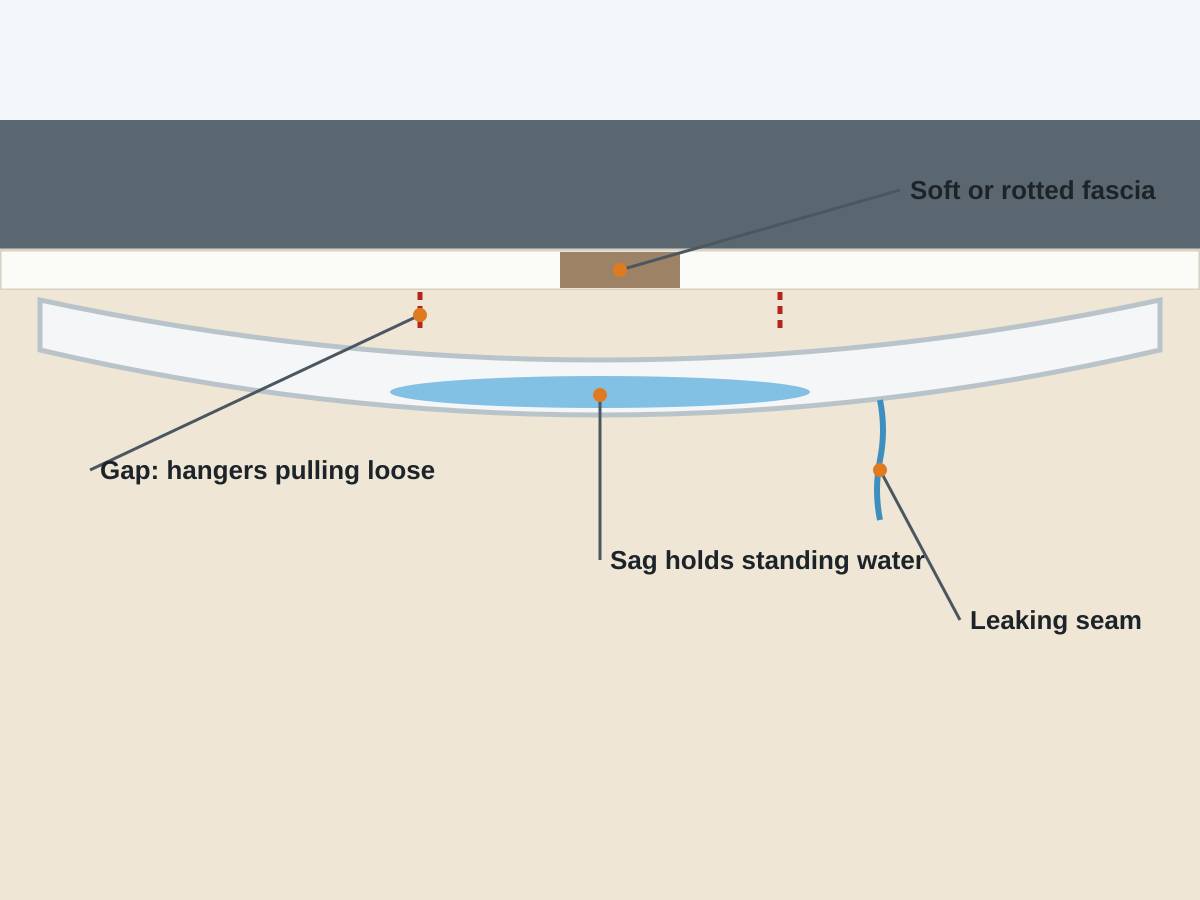
- Sagging runs: a dip in the middle where water stands after rain
- Gutters pulling away from the house: a visible gap between the gutter and the fascia board, or spikes backing out
- Drips at seams, corners and end caps even when the gutter is clean
- Water running behind the gutter: staining on the fascia or siding directly below it
- Overflow at one spot while the rest of the gutter is fine, which often points to pitch or a downspout problem
- Peeling paint or soft wood on the fascia behind the gutter
- Loose or missing downspout sections and elbows
Not sure whether it's a clog or a repair? Start with why gutters overflow: 7 causes and fixes.
What to do right now
- Stay off the ladder in bad weather. A gutter that is hanging loose is heavy and unpredictable. Keep people and cars out from under it.
- Redirect water away from the foundation with a temporary downspout extension or splash block if one has come off.
- Take photos from the ground during rain if you can safely do so. They help a pro diagnose the problem quickly.
- Call for an assessment before the next big storm, especially if water is reaching your foundation or crawlspace.
Common gutter repairs, explained
Re-securing gutters that are pulling away
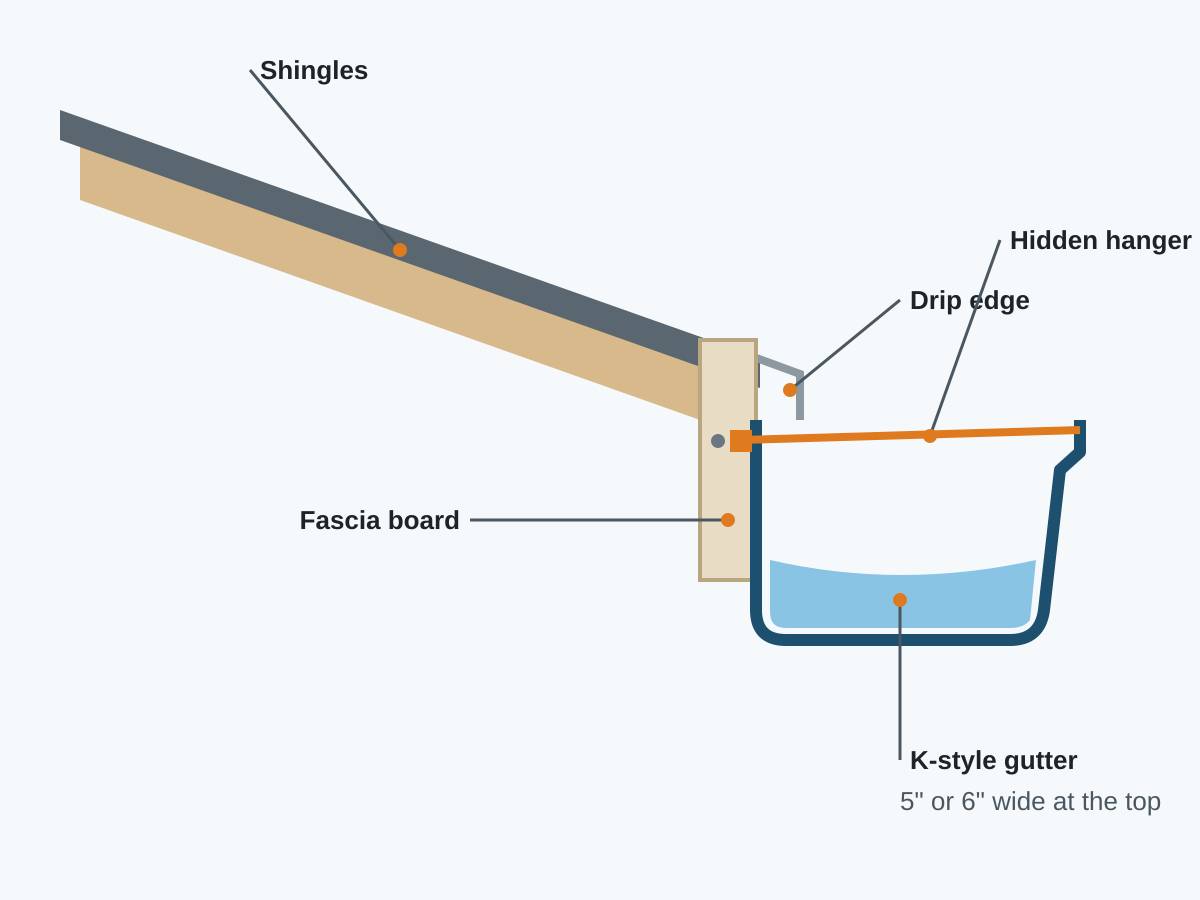
Older gutters were often hung with long spikes driven through the gutter into the fascia. Over years of expansion, contraction and heavy loads, spikes loosen and back out. The usual fix is to replace them with hidden hangers screwed into the fascia (and ideally into the rafter tails behind it), spaced closely enough to carry the weight of water and debris. If the fascia wood is soft, it has to be repaired first. See fascia and soffit repair.
Fixing sagging gutters and re-pitching
A sag is usually a failed hanger, a spot where debris weight bent the gutter, or a run that was never pitched correctly. The pro takes the run down or loosens it, resets the slope toward the downspout, and adds hangers where they're missing. If standing water has been sitting in the sag for years, check for corrosion or a pinhole leak at the low point.
Sealing leaking seams, corners and end caps
Sectional gutters have a joint every section, and corners, end caps and downspout outlets all rely on sealant that breaks down over time. A proper reseal means cleaning out the old sealant, drying the joint and sealing from the inside. Smearing new caulk over dirty, wet metal rarely lasts a season.
Downspout outlet and elbow repairs
Loose outlets and crushed or separated elbows let water pour straight down the wall. These are usually quick fixes. If the downspout or an underground drain is clogged, see downspout cleaning and repair.
The typical repair process
- Clean first. You can't judge pitch or find a leak in a gutter full of debris. Many repairs are done on the same visit as a cleaning.
- Inspect: hangers, seams, pitch, outlets, and the fascia behind the gutter.
- Explain and photograph what they found, and give you a price before doing extra work.
- Repair: re-hang, re-pitch, reseal or replace sections as agreed.
- Test with water from a hose to confirm it flows to the downspout with no drips.
Repair or replace?
Repair usually makes sense when the problems are limited to a few spots and the gutter metal is sound. Replacement becomes the better value when:
- Several runs sag, leak or have been patched repeatedly
- The gutters are bent, dented or corroding through
- The gutters are undersized for the roof and overflow in every downpour even when clean
- You're replacing a lot of rotted fascia anyway, so the gutters are coming down regardless
If replacement is on the table, read seamless gutter replacement for sizing and what to ask.
What affects the cost
- Type of repair: resealing a seam is quick; re-hanging and re-pitching a 40-foot run takes longer
- Height and access: two-story eaves and steep roofs need more equipment
- Fascia condition: rotted wood behind the gutter must be repaired before the gutter can be re-secured
- Materials: matching an existing gutter profile and color
Small repairs done during a cleaning visit are usually the least expensive; re-pitching a whole run or replacing sections costs more. See the gutter cost guide for more, or call (678) 721‑8964 for a free estimate on your home.
Questions to ask a pro
- What's causing the problem, and can you show me photos?
- Is the fascia behind the gutter solid enough to hold new hangers?
- What kind of hangers will you use, and how far apart?
- Will you clean the gutters and water-test after the repair?
- Is this a repair that will last, or am I better off replacing this run?
- Are you insured for work at this height? (Ask for proof of any credential you rely on.)
When to call a professional
Call promptly if a gutter is hanging loose, water is reaching your foundation, or you see soft wood behind the gutter. Anything on a two-story eave or a steep roof is a job for a pro. Tell us what you're seeing and we'll connect you with an experienced, qualified local professional.