
Signs of a clogged downspout
- Overflow right above the downspout while the rest of the gutter drains
- A dry downspout outlet during a steady rain
- Gurgling, dripping or banging inside the downspout
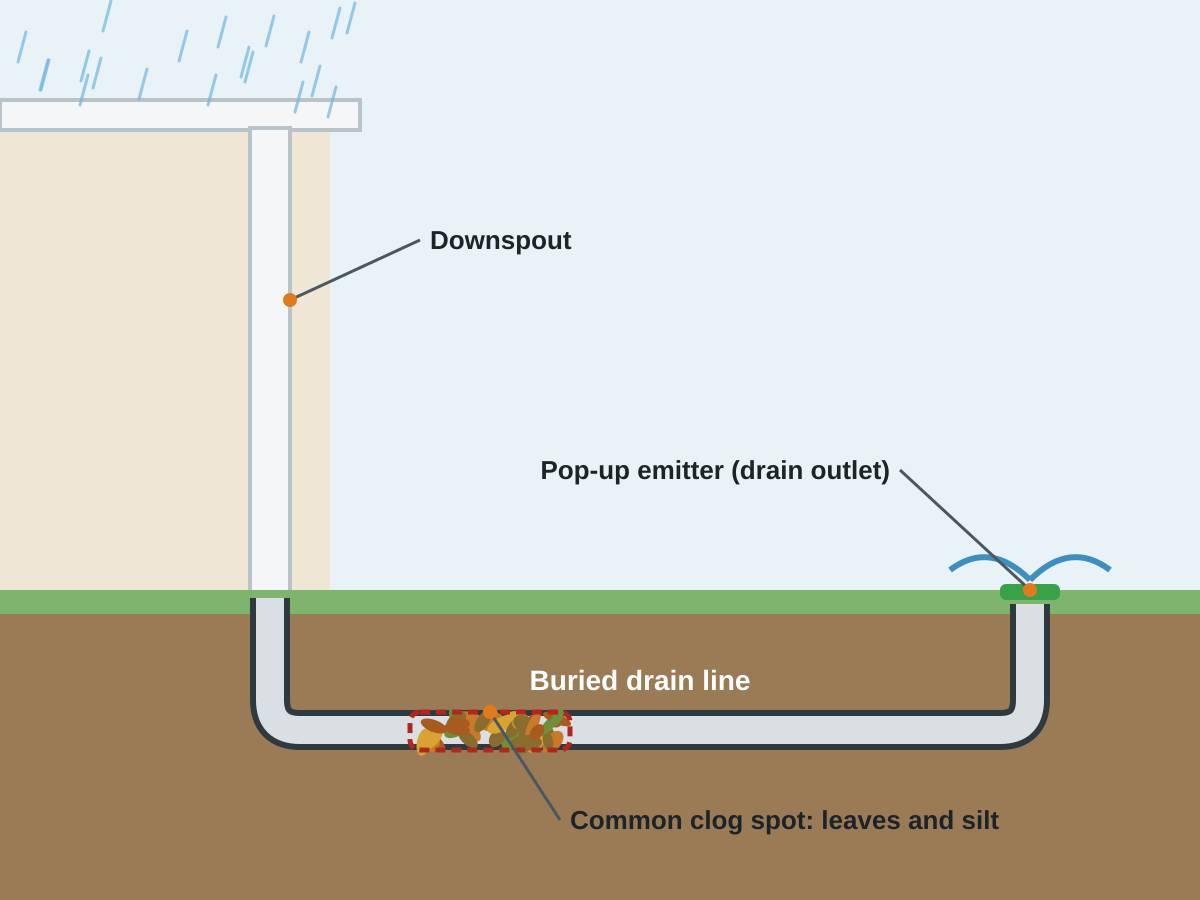
- Water bubbling up around the base where the downspout meets a buried pipe
- A pop-up emitter in the yard that never pops
- Soggy ground, erosion or washed-out mulch at the base of the downspout
- Dented or crushed sections from a mower, ladder or falling branch
What to do right now
- Get the water away from the house. If the downspout connects to a buried pipe that's backing up, a temporary above-ground extension can move water away from the foundation until the line is cleared.
- Check the easy spots from the ground. The bottom elbow is a common clog point. If you can safely remove it at ground level, you may find the blockage.
- Don't climb onto the roof to push a hose or snake down from the top. Leave the high end to a pro.
- Note where water comes out. Knowing whether the buried line has a pop-up emitter, a curb outlet or no visible outlet helps a pro plan the job.
Underground downspout drains
Some homes around Marietta have downspouts that connect to buried pipes, which carry water out to a pop-up emitter in the yard, a ditch, or the street. They look tidy, but they clog in ways you can't see:
- Leaves and shingle grit wash down from the gutter and settle where the pipe flattens out
- Corrugated pipe, if that's what was used, has ridges that trap debris and is easier to crush than smooth-wall pipe
- Roots find their way into joints
- Soil settling creates a low spot (a "belly") where silt collects
- Buried or blocked outlets: a pop-up emitter covered by mulch or sod can't open
The best protection is keeping the gutters themselves clean, so less debris goes down the pipe in the first place. See how often to clean gutters in Cobb County.
The typical process
- Clean the gutter and flush the downspout from the top to confirm where the clog is.
- Clear above-ground clogs at elbows and joints; reassemble and secure.
- Test the buried line with water and look for where it backs up.
- Clear the line with a jetter or drain snake. Some pros also offer a camera inspection to find breaks or roots.
- Repair if needed: replace crushed or separated sections, which may mean digging.
- Confirm flow at the outlet and make sure the emitter opens.
Downspout repairs and upgrades
- Re-securing loose downspouts with straps so they don't pull away from the wall
- Replacing dented or crushed sections and elbows
- Extensions and splash blocks to move water farther from the foundation
- Adding a downspout to a long run that overflows because one outlet can't keep up
- Upsizing to larger downspouts (for example, 3×4-inch instead of 2×3-inch) where heavy storms overwhelm the originals. See gutter replacement and sizing.
Will gutter guards keep downspouts clear?
Guards reduce the leaves that reach the downspout, which helps, but fine debris like shingle grit, pollen and pine needle fragments can still get through some types. If clogged downspouts are your main headache, read are gutter guards worth it? and our gutter guard guide before buying.
What affects the cost
- Where the clog is: an elbow at ground level is quick; a deep clog in a long buried line takes longer
- Length and type of underground pipe
- Whether digging is needed to repair a crushed or root-filled section
- Height of the home for clearing from the top
- Whether it's done with a cleaning (often more efficient than a separate visit)
Clearing a buried line costs more than flushing an above-ground downspout, and digging adds more. See the cost guide, or call (678) 721‑8964 to get connected for a free estimate.
Questions to ask a pro
- Is flushing the downspouts included in the cleaning price?
- How will you clear the underground line, and what happens if it's broken?
- Can you show me where the line comes out?
- If digging is needed, how will you restore the lawn or beds?
- Would an extra downspout or bigger downspouts help my overflow problem?
When to call a professional
Call when water is backing up at the base of a downspout, overflowing above it, or pooling by the foundation. Underground lines need the right tools to clear without damage. Tell us what you're seeing and we'll connect you with an experienced, qualified local professional.